Inventions by Philip Nitschke
The Kairos Kollar
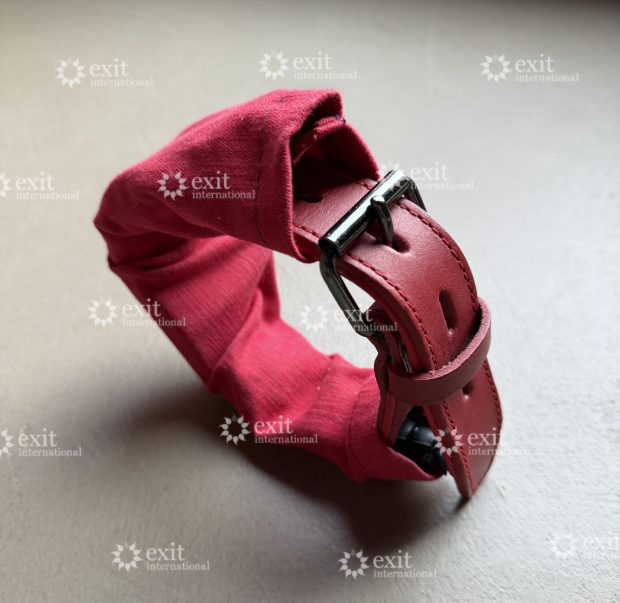
Informed by the preliminary work undertaken in the 1940s by the Red Wing Studies, the Exit Kairos Kollar represents a simple device that is designed to provide a fast and peaceful death.
From mid 2026, the Kollar is undergoing testing.
The results will be released in the European autumn and the full plans published in the Peaceful Pill eHandbook in late 2026.
The Sarco
The Sarco is a 3D-printed euthanasia capsule that allows for a peaceful and reliable death using liquid nitrogen. It has featured in a number of significant installations over recent years.
In 2017, a 1/8th, 3D-printed model of the Sarco was unveiled at the NuTech conference in Toronto Canada.
Currently in the final stages of production in the Netherlands, the Sarco was unveiled (in model form) in 2018 at the Amsterdam Funeral Fair.
The first fully-3D printed Sarco was exhibited in 2019 as part of Venice Design.
In 2020, Sarco went on display as part of the ‘(Re) Design Death’ exhibition at the Cube Design Museum in Kerkrade in the Netherlands.
Cube is the only museum in the Netherlands devoted solely to the design process. (Re) Design Death exhibition.
In 2021, Sarco was shown at the ‘Zuizid: Let’s Talk about it’ exhibition at the Museum for Sepalkral Kultur in Kassel, Germany.
In 2022, the Sarco was exhibited at Nowy Theatre, Poznan Poland.
In 2023, Sarco featured at the 50th birthday conference of the NVVE, Netherlands.
In July 2024, the Sarco was unveiled at a press conference in Zurich Switzerland.
In September 2024, the Sarco was used by a seriously ill American woman to die peacefully in the canton of Schaffhausen in Switzerland. A criminal investigation is currently underway.
More information Sarco is at www.sarco.design
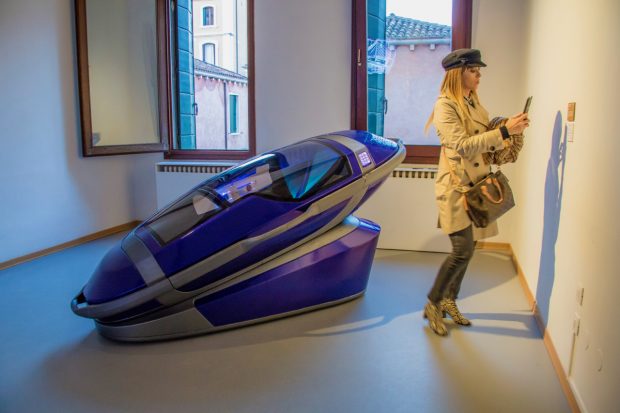 Sarco at Palazzo Michiel, Venice Design 2019
The Deliverance Machine
In 1996, at the time of the world’s first right to die law, the Rights of the Terminally Ill Act (ROTI) of Australia’s Northern Territory, Dr Philip Nitschke created the Deliverance Machine
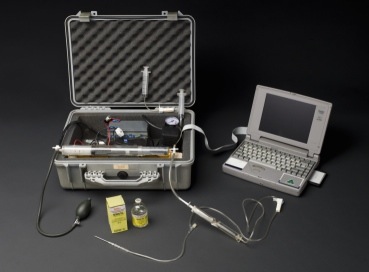
The Deliverance Machine is a laptop computer connected to a syringe driver. When the reservoir of the syringe is filled with a lethal drug, such as Nembutal, and an intravenous line connected to the patient, the person can self-administer the drug.
The Deliverance Machine was created to give the dying person the final say in when they would exit.
The Machine also allowed Dr Nitschke to move out of the immediate space of the patient; instead allowing that person’s family in. As the medical practitioner, Dr Nitschke could retire to the corner of the room.
When the ROTI Act was overturned by the national Parliament of Australia, the Machine had no further use.
In 2000 the Deliverance Machine was acquired by the British Science Museum as part of the Wellcome collection.
My Beautiful Chair
With Melbourne sculptor, Greg Taylor, My Beautiful Chair at MONA (Museum of Old and New Art) is a play on the original ‘Deliverance Machine’.
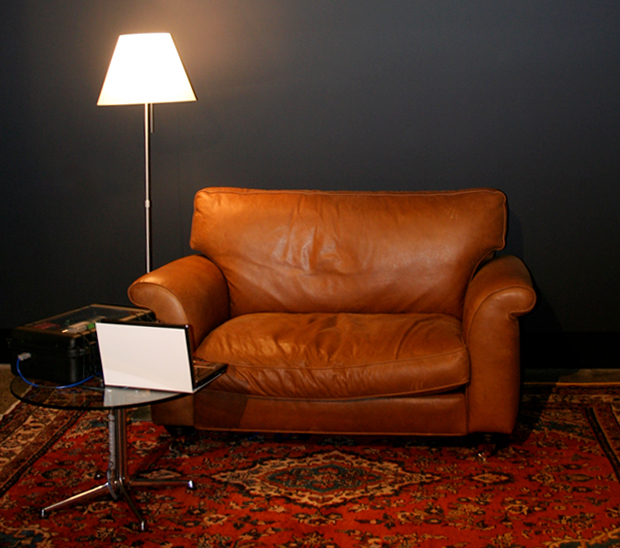
As described by The Age, My Beautiful Chair offers a large, comfy leather lounge chair, a Persian rug, a standard lamp. A perfect lounge room setting.
In addition the installation features a laptop computer with a software program that is triggered when one sits in the chair. When the laptop starts up, the questions are blunt, if you press this button you will die. The final screen states ‘you are now dead’.
Described as one of the most confronting but engaging exhibits at MONA, My Beautiful Chair has since inspired further collaborations, most notably in the Netherlands in 2016.